Guide · House Washing
The Green and Black Stuff on Your Siding: Algae, Mildew, or Mould?
That green film creeping up the shaded side of the house, or the black spots and streaks that appeared over a wet summer — most people call it all "dirt" and try to hose it off. It isn’t dirt. It’s alive, and knowing which living thing you’re looking at tells you why it keeps coming back and what actually makes it stay gone.
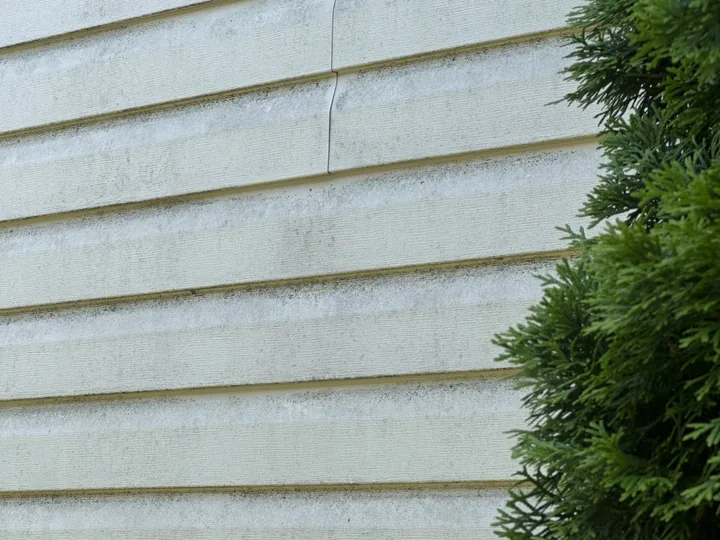
The green film: algae
The soft green haze on siding is algae — a living organism that roots into the texture of the surface rather than sitting on top of it like dust. It needs three things to thrive: shade, moisture, and something to cling to, and your north-facing walls hand it all three. That’s why the green almost always shows up worst on the north side, under overhangs, behind shrubs, and on any wall that never quite dries out.
Around here it loves the waterfront especially. A cottage or year-round home near the bay lives in higher humidity, catches more morning dew, and often has mature trees keeping walls in shade — a near-perfect home for algae. If your lake-side wall greens up faster than your neighbour’s place two streets inland, that’s why.
The black spots and streaks: mildew and mould
Black is the trickier colour, because a few different things wear it. Most often, dark spots or blotches in damp, shaded spots are mildew or mould — organic growth that settles wherever moisture lingers. But two common lookalikes are worth ruling out before you decide what you’re dealing with:
- Tiny tar-like specks near mulch beds — this is artillery fungus, and it behaves nothing like algae. It grows in damp wood-mulch and forcibly shoots sticky spore packets toward light-coloured surfaces, where they cure into hard black dots that cling like glue.1 If your lower siding looks flecked with little dots of tar, especially above a fresh mulch bed, that’s the culprit.
- Dark streaks running down from the roof — those are usually roof algae (often the cyanobacteria Gloeocapsa magma), which leaves the black stains you see streaking down shingles and the wall below.2 That’s a roof-cleaning question more than a siding one — we cover it in its own guide.
Mould or mildew — does the name matter?
Honestly, not much for cleaning. "Mildew" is really just a common name for certain flat, powdery moulds, and both are fungi that spread by spores. A soft wash treats them identically. What actually matters is the thing algae, mildew, and mould all share: they’re organic and alive. That single fact decides everything about how you clean them — because a living organism has to be killed, not merely rinsed. Knock the visible layer off and leave the roots, and you’ve bought yourself a few weeks, not a clean house.
Why it grows here in the first place
Simcoe County is close to ideal for exterior growth. Between the lakes, the tree cover, and our humid summers, walls spend a lot of the year damp and shaded — exactly the conditions algae and mildew want. Waterfront and heavily-treed lots see it fastest, and any wall that gets little direct sun will always green up before the sunny ones. It isn’t a sign you keep a dirty house; it’s a sign you live somewhere green and wet, which is most of the nice parts of this county.
Why it’s worth dealing with
Beyond looking tired, organic growth does a little slow harm. A film of algae and mildew holds moisture against the surface, and anything that keeps a wall damp works against it over time — encouraging more growth, creeping into seams, and dulling the finish. It also spreads: left alone, a patch on one shaded wall seeds the next. None of this is an emergency, and we’re not here to scare you — but a wall that dries out clean lasts and looks better than one wearing a permanent damp coat.
Why the green comes back after pressure washing
This is the part that catches people out. Blast algae with a pressure washer and the wall looks instantly clean — but high pressure only removes the surface layer. The organism is still rooted in the texture underneath, alive, and it regrows fast, which is why pressure-washed siding often looks tired again within a season. Worse, high pressure can force water up behind the panels and cause real damage on the way.
Siding should be soft washed instead: purpose-made detergents applied at low pressure — roughly garden-hose strength — that kill the growth at the root, followed by a gentle rinse. Nothing regrows until new spores recolonise from scratch, which takes far longer, so a soft wash stays clean well beyond a pressure wash. We walk through exactly how and why in the soft washing guide.
Doing it yourself, safely
Plenty of homeowners handle a ground-floor wash themselves, and the principle isn’t a secret: a growth-killing detergent with a surfactant, time to dwell, a gentle rinse. Yes, that chemistry is bleach-based — which is effective but earns real respect. The three things to get right:
- Dilution. Too strong scorches plants and can damage surfaces; too weak does nothing, which is why most off-the-shelf "house wash" hose attachments fade so fast. This is the whole game, and it’s worth getting properly rather than eyeballing.
- Plant protection. Soak the gardens and any plantings under the wall before you start and rinse them again after, so nothing sits on a leaf. This one step prevents most of the plant damage DIY washes cause.
- Rinse thoroughly, in the shade. Work when the wall is out of direct sun so the solution never dries on the surface, and rinse top to bottom so nothing streaks.
Ground-floor siding is a fair weekend job for a careful homeowner. When it’s up high, hanging over gardens, or you’d simply rather not mix chemicals over your own flower beds, that’s what we’re here for.
The marks that aren’t organic at all
One honest caveat before you reach for the sprayer: not every stain on siding is alive. Rust streaks, chalky oxidation, and the white bloom of efflorescence are chemical problems, not growth — and a house-wash detergent won’t touch them (bleach can actually set rust darker). If your "stain" is orange, chalky, or powdery-white rather than green or black, it needs different chemistry entirely, which we cover in the stubborn stain guide.
When to wash
Most Simcoe County homes look their best on an every-year-or-two cycle — annually for shaded or waterfront homes, where growth builds fastest. The practical trigger is simple: when the green or black is visible from the driveway, it’s already well established, and washing it before another wet season sets in keeps it from getting a real grip. Timing-wise, a wash any time from spring through fall works; earlier in the season means you enjoy the clean walls longer.
Frequently asked questions
What is the green stuff on my siding?
Algae — a living organism, not dirt. It roots into the surface texture and thrives in shade and moisture, which is why it’s worst on north-facing and waterfront walls. Because it’s alive, it has to be killed at the root, not just rinsed, or it regrows.
What are the black spots or streaks?
Usually mildew or mould in damp, shaded spots. Watch for two lookalikes: tar-like specks near mulch beds are artillery fungus, and black streaks from the roofline are usually roof algae — a roof-cleaning matter rather than a siding one.
Is it mould or mildew — and does it matter?
Not for cleaning. "Mildew" is just a common name for certain flat moulds, and a soft wash treats both the same. What matters is that they’re organic and alive, so the point of the wash is to kill them, not simply rinse them.
Will bleach remove algae?
A properly diluted, surfactant-carrying detergent wash does — and that chemistry is bleach-based. The DIY cautions are dilution, plant protection, and a thorough rinse: too strong harms plants and surfaces, too weak does nothing.
Does the green come back after washing?
After pressure washing, yes — it only strips the surface and leaves the roots alive. A soft wash kills it at the root, so it stays gone far longer. More on that in the soft washing guide.
Sources: Michigan State University Extension — Artillery Fungus (Sphaerobolus stellatus) · Asphalt Roofing Manufacturers Association — Algae & Moss Prevention and Cleaning