Guide · Deck & Wood Care
Deck Restoration: Bringing Grey, Weathered Wood Back to Life
A tired deck almost never needs replacing — it needs restoring. Under the grey and the algae, the wood is usually sound; it just lost its finish and picked up a season’s worth of growth. Here’s what proper deck restoration involves, how to do it yourself if you’re handy, the one step that quietly ruins most DIY jobs, and where we hand off to a specialist.
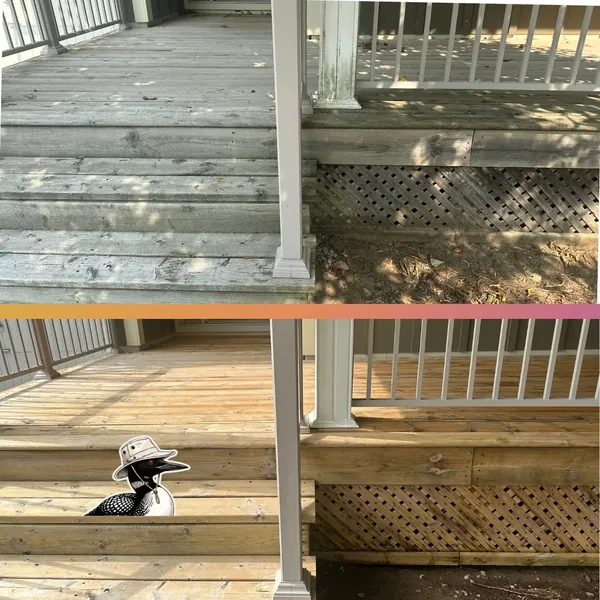
Why decks go grey — and slippery
Two things are happening to weathered boards, usually at once. The first is UV bleaching: sunlight breaks down the surface fibres of the wood (the lignin that binds it), fading a warm cedar or brown down to a silvery grey. The second is organic growth — the same algae and mildew that shade-load your siding settles into the flat, damp, horizontal surface of a deck and turns it green-black. That film is more than ugly; wet, it’s a real slip hazard, which is the reason a lot of people finally book the job.
The good news is that neither problem goes deep. The grey is a surface layer, and the growth sits on top. Restoration is the process of taking both off and protecting what’s underneath.
None of this is mandatory. A sealed deck sheds water longer, but plenty of decks look terrific left natural — and boards that seemed past saving under grey weathering and algae often come up far better than their owner expected. So it’s worth seeing yours clean before you commit either way. If you do want it finished, we can arrange the staining alongside our cleaning through Turtle Painting in Barrie, or you can book them yourself — or do it as a DIY project once the deck is clean, dry, and brightened.
Step 1: The wood-safe wash (not a pressure blast)
This is where decks get wrecked. It’s tempting to point a pressure washer at grey wood and watch it turn light again — and it does, briefly. But softwoods like cedar and pressure-treated pine are soft enough that a high-pressure jet raises the grain into a splintery fuzz and carves visible lines and gouges that no amount of sanding fully hides. The deck looks "cleaned" and is measurably rougher and shorter-lived.
The right way is the same principle as soft washing a house: let chemistry do the work before anything mechanical touches the wood. A purpose-made deck cleaner goes on wet and is left to dwell ten to fifteen minutes to lift the grey and kill the algae. Two chemistries do this well: an oxygen cleaner (sodium percarbonate), the gentlest option, or a stronger alkaline cleaner (sodium metasilicate) that lifts heavier greying and organic build-up. Both are alkaline, so they temporarily darken the wood — that’s expected, and the brightener in the next step corrects it. Work in sections and keep the surface wet through the whole dwell (smaller sections on a hot, sunny day so nothing dries out), then remove the softened top layer. A stiff brush and a low-pressure rinse is the safest DIY route; the way we do it is a controlled fan tip — a 40° or wider — moving the full length of each board without stopping and held well back, which clears the lifted grey evenly without the lines or furring that a narrow, too-close, or too-slow nozzle leaves behind. Some light fuzz on a badly weathered board is normal and sands off; a proper wash comes clean without the boards being torn up.
Step 2: Brighten and neutralize
Cleaning does the heavy lifting, but it leaves the wood chemically "high" — the alkaline cleaner raises the wood’s pH and can leave it looking slightly darkened or blotchy. A wood brightener (usually oxalic acid) is the answer, and it does a few jobs at once: it drops the pH back to neutral so the wood is ready to accept a finish, it restores that warm, freshly-sanded tone, and it lightens the rust and tannin stains that bleed from screws and fasteners into the wood around them. It goes on right after the rinse — the colour shift starts within about thirty seconds, which is oddly satisfying to watch — dwells briefly, and rinses off at low pressure with no scrubbing. Skipping this step is why some DIY decks come out clean but oddly grey or grimy-looking; the brightener is what makes wood look new rather than just washed.
Step 3: Let it dry — where most DIY jobs quietly fail
This is the step there’s no shortcut for. Stain and sealer work by penetrating into the wood’s pores — and if those pores are still full of water from the wash, the finish can’t get in. It sits on top, then peels, flakes, or simply never absorbs evenly. Give the deck at least 48 hours of dry weather before any finish goes down — more if it’s shaded, dense hardwood, or the humidity’s been high. A cheap moisture meter takes the guesswork out; under about 15% is the target. The urge to stain the same weekend you cleaned is the most expensive mistake on this list.
Step 4: Stain or seal — the optional part we can arrange
A penetrating stain or sealer is what turns a clean deck into a restored one. It blocks the UV that greys the wood and the water that swells and cracks it, and it’s what buys you two to three years before the next refresh instead of watching the grey creep back in a month.
Here’s our honest boundary: Nord cleans, brightens, and restores the wood to a stain-ready surface — but we don’t stain or seal decks ourselves. It’s a genuine craft, the products matter, and it deserves someone who does it every day. So we can arrange that step with Turtle Painting in Barrie, who do it properly — either alongside our cleaning or afterwards, or you’re welcome to book them direct. We’d rather point you to a specialist than do half a job outside our lane — and it means the prep and the finish are each done by people who take that part seriously. (If you’d rather do the finish yourself, that’s a great DIY project once the deck is clean, dry, and brightened.)
What about composite and PVC decking?
Composite boards don’t grey or need staining, but they absolutely grow algae and mildew in the shade — often worse than wood, because the surface texture holds moisture. They get the same gentle soft-wash treatment: a purpose-made cleaner, low pressure, no brightener and no finish needed. Never pressure-blast composite either; the caps scratch, and manufacturers’ warranties frown on it.
The honest DIY-vs-handled call
Deck restoration is one of the more doable exterior projects — if you have a free weekend, a garden sprayer, a stiff brush, and the patience to wait out the dry time. The cleaner and brightener are inexpensive and widely available. Where people call us is when the deck is big, the growth is heavy, the boards are high off a slope, or they simply don’t want to spend two weekends (one to clean, one to stain) on their knees. Either way, now you know what "good" looks like — so you can hold a DIY job, or a hired one, to the same standard.
Frequently asked questions
Can I just pressure wash it myself?
Gently, if at all. Keep the pressure low, the tip wide, and the nozzle a good foot off the wood, moving with the grain — and expect to raise some fuzz that needs a light sanding. Honestly, a cleaner and a brush do a better job with none of the damage risk. High pressure is what turns a good deck rough.
How often should a deck be cleaned and re-stained?
A wash once a year keeps the algae and slip risk down. A re-stain every two to three years is typical — sooner on a south-facing deck that bakes all day, later on a covered or shaded one. When water stops beading and starts soaking in, it’s time to refresh the finish.
Will cleaning remove old, peeling stain?
A standard cleaner lifts organics and greying, but it won’t pull a failed film finish or heavy old stain out of the wood — that takes a stronger caustic stripper (sodium hydroxide) or sanding, and it’s the one part of this that genuinely earns a pro. Get the caustic wrong and you scorch the wood or leave a blotchy mess. If your deck has a peeling solid stain or deep old colour, mention it when you ask us for a quote so we scope it honestly.
Is the wash safe for my plants and the lawn?
With proper technique, yes — we pre-soak and rinse surrounding plantings throughout the job, the same way we protect gardens on a house wash. Oxygen-based deck cleaners are far gentler on landscaping than the older chlorine-heavy approach.